
Company Driver vs Owner-Operator: Pros and Cons
Company Driver vs Owner-Operator: Pros and Cons
The trucking industry offers two primary career paths: working as a company driver or becoming an owner-operator. Both paths have unique benefits and challenges, and the right choice depends on your goals, risk tolerance, and lifestyle preferences. Let’s break it down.
1. Company Driver
What It Means
A company driver works for a trucking company, operating vehicles owned by the company. You receive a salary or pay per mile and may have benefits like health insurance and retirement plans.
Pros
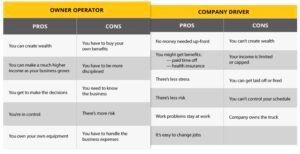
- Stable Income – You get a steady paycheck without worrying about fluctuating freight rates or operational costs.
- Benefits – Health insurance, retirement plans, paid time off, and other perks are often provided.
- No Maintenance Hassles – Truck upkeep, repairs, and licensing are handled by the company.
- Less Financial Risk – You don’t need to invest in buying or leasing a truck.
- Structured Schedule – Many companies provide consistent routes and hours.
Cons
- Limited Flexibility – Schedules and routes are assigned by the company.
- Lower Earning Potential – You earn less per mile compared to owner-operators after expenses.
- Less Control – You cannot choose your loads or clients.
- Career Ceiling – Advancement may be slower; you’re limited to company policies.
2. Owner-Operator
What It Means
An owner-operator owns or leases their truck and operates as an independent contractor. You are responsible for finding loads, maintenance, and business management.
Pros
- Higher Earning Potential – After expenses, owner-operators can earn significantly more than company drivers.
- Flexibility & Independence – You choose your clients, loads, and routes.
- Tax Benefits – Business expenses like fuel, maintenance, and insurance can be deductible.
- Business Growth Opportunities – You can expand your fleet or hire drivers in the future.
- Control Over Schedule – Decide when and where to work.
Cons
- High Startup Costs – Buying or leasing a truck, insurance, permits, and maintenance can cost tens of thousands upfront.
- Financial Risk – Income is variable; unpaid loads or repairs can hurt your earnings.
- Administrative Work – You handle taxes, permits, insurance, and invoicing.
- Maintenance Responsibility – Any truck issues fall on you, which can cause downtime and costs.
- Loneliness & Stress – Being your own boss can be stressful, and long hauls may feel isolating without company support.
3. Key Considerations
When deciding between being a company driver or owner-operator, consider:
- Risk Tolerance: Can you handle financial uncertainty and truck maintenance?
- Work-Life Balance: Do you prefer structured hours or flexible schedules?
- Long-Term Goals: Are you looking for stability or growth potential?
- Financial Situation: Can you afford the upfront costs of owning a truck?
- Career Satisfaction: Do you enjoy independence or value structured support?
4. Conclusion
Both career paths have their advantages and drawbacks.
- Company drivers enjoy stability, benefits, and less risk.
- Owner-operators enjoy higher earning potential, flexibility, and business ownership—but with greater financial and operational responsibility.
Your decision ultimately depends on your lifestyle, financial situation, and career ambitions. Many drivers start as company drivers to gain experience before transitioning to owner-operators when they feel ready for the responsibility and potential rewards.